All along I've been reading about MOOCs and I always come across articles quoting Sebastian Thrun's conference and announcing giving up tenure to focus on a new life project.
Even though to date he has given up on his initial mission, I decided to look for the video of the conference and watch it myself.
His speech made me think I guess I've chosen the right path now. This is my passion. The education industry is where I belong. Only a few of my friends and I have common interests now, but it doesn't matter. I'm officially calling myself an academic (or aspiring to be one). I love what I'm doing and my involvement in global matters in education. I have a long way to go but I know I've found my place.
"I started to realize we are setting our students not for success but for failure" - Thrun
Book Worm

So many books to read, so little time.
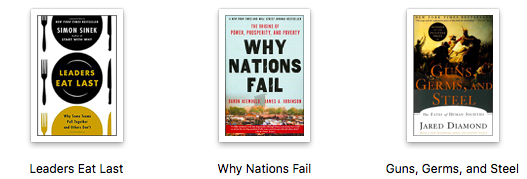
Books to read in 2018
So many books to read, so little time.
Friday, January 3, 2014

Tuesday, December 3, 2013
Is google making us stupid? #EDCMOOC
Article: http://www.theatlantic.com/magazine/archive/2008/07/is-google-making-us-stupid/306868/
I don't think google is making people stupid. It's opening doors for people to gain information. But to those who do not know how to discern real facts from made up stuff, that should be a problem. Information management is a new skill that people should learn to develop nowadays.
That is why schools should teach students the skill in research and verifying facts so that they don't quickly believe anything they see in the internet.
The article said, that people read less because of the internet.
I on the other hand, have opposite experience.
I barely read when I was younger. I was lazy to read. Too lazy that every time I start reading I doze off. Seriously. I think it's because my brain isn't used to reading, so it falls asleep.
But as I grew older, I got overwhelmed with the kind of knowledge I could pick up because of the internet. Technology has also given me the hobby of reading because now I have tons of e-books in my ipad.
Reading for me is now a hobby.
My good reads account is now filled with accomplished books. And the only reason I wouldn't read a book is because I don't have the time or I have other important priorities. Reading is actually a huge distraction for me now because once I start reading a book, I tend to forget my other responsibilities -_-. It's as if I must finish the book first. That's why I postpone reading a book in a later time when I know I don't have exams or other things I should be doing because I can't stop myself from reading!!
I don't think google is making people stupid. It's opening doors for people to gain information. But to those who do not know how to discern real facts from made up stuff, that should be a problem. Information management is a new skill that people should learn to develop nowadays.
That is why schools should teach students the skill in research and verifying facts so that they don't quickly believe anything they see in the internet.
The article said, that people read less because of the internet.
I on the other hand, have opposite experience.
I barely read when I was younger. I was lazy to read. Too lazy that every time I start reading I doze off. Seriously. I think it's because my brain isn't used to reading, so it falls asleep.
But as I grew older, I got overwhelmed with the kind of knowledge I could pick up because of the internet. Technology has also given me the hobby of reading because now I have tons of e-books in my ipad.
Reading for me is now a hobby.
My good reads account is now filled with accomplished books. And the only reason I wouldn't read a book is because I don't have the time or I have other important priorities. Reading is actually a huge distraction for me now because once I start reading a book, I tend to forget my other responsibilities -_-. It's as if I must finish the book first. That's why I postpone reading a book in a later time when I know I don't have exams or other things I should be doing because I can't stop myself from reading!!
Wednesday, November 27, 2013
MOOCs are here to stay for good.
Came across another article! http://www.linkedin.com/today/post/article/20131125225049-131079-the-mooc-market-takes-off
This talks about how MOOCs are eventually evolving with corporations offering skill based MOOCs.
But what intrigued me more are the comments of people about MOOCs.
Lots of positive comments and I have the same sentiments.
Some comments that I like are:
"This will be the answer to all those who are skeptical about the success of MOOCs. There are more critics than supporters of MOOC.I believe that MOOCs are going to suceed in the long run. It is a question of finding a proper use and viable model which I am sure will emerge with time."
"MOOCs are here to stay for good. Every new phenomenon has its pros and cons. I guess MOOCs has more pros than cons, hence it is going to be a huge success eventually."
"Amazing courses, really its the future education system"
There are still of course, some critics who question how to verify if the student did the MOOC or paid somebody to do it. I guess there will be some ways to verify that because the lack of skill will show.
This talks about how MOOCs are eventually evolving with corporations offering skill based MOOCs.
But what intrigued me more are the comments of people about MOOCs.
Lots of positive comments and I have the same sentiments.
Some comments that I like are:
"This will be the answer to all those who are skeptical about the success of MOOCs. There are more critics than supporters of MOOC.I believe that MOOCs are going to suceed in the long run. It is a question of finding a proper use and viable model which I am sure will emerge with time."
"MOOCs are here to stay for good. Every new phenomenon has its pros and cons. I guess MOOCs has more pros than cons, hence it is going to be a huge success eventually."
"Amazing courses, really its the future education system"
There are still of course, some critics who question how to verify if the student did the MOOC or paid somebody to do it. I guess there will be some ways to verify that because the lack of skill will show.
The MOOC hype is dead, but not MOOC itself.
Came across another article about Sebastian Thrun's announcement on moving from higher ed courses to vocational courses.
http://theory.cribchronicles.com/2013/11/15/in-the-wake-of-mooc-hype/
I would like to re-quote what George Siemens said - “Make no mistake – this is a failure of Udacity and Sebastian Thrun. This is not a failure of open education, learning at scale, online learning, or MOOCs.”
Also what Martin Weller said - “Does this mean MOOCs are dead? Not really. It just means they aren’t the massive world revolution none of us thought they were anyway.”
Quoting them is the simplest way to express what I also thought. Like I said in my previous post, this does not make me less interested in pursuing research about MOOCs. But instead, it even makes it more interesting because nobody really knows what the future of MOOCs will be.
Some people I guess just over reacted quickly about the MOOC hype and that is how typically human behavior is, they quickly reject new ideas and fear of changes.
Anyway... I am now soooooooooo outdated about MOOCs, I haven't been keeping myself updated because I have been too busy catching up with the MOOCs I actually enrolled myself with.
But relax Toni, all your MOOCs will end by 2nd week of December, then your next MOOC will start January next year. It means you have that free time to focus on your thesis now.
Wait. Free time. Thesis?
How about social life?
Ain't nobody got time for that.
Lol
I am such a nerd. But hey, I always look forward to weekends. Life of balance.
It's my 26th birthday this Sunday.
Looking forward to seeing my friends :)
http://theory.cribchronicles.com/2013/11/15/in-the-wake-of-mooc-hype/
I would like to re-quote what George Siemens said - “Make no mistake – this is a failure of Udacity and Sebastian Thrun. This is not a failure of open education, learning at scale, online learning, or MOOCs.”
Also what Martin Weller said - “Does this mean MOOCs are dead? Not really. It just means they aren’t the massive world revolution none of us thought they were anyway.”
Quoting them is the simplest way to express what I also thought. Like I said in my previous post, this does not make me less interested in pursuing research about MOOCs. But instead, it even makes it more interesting because nobody really knows what the future of MOOCs will be.
Some people I guess just over reacted quickly about the MOOC hype and that is how typically human behavior is, they quickly reject new ideas and fear of changes.
Anyway... I am now soooooooooo outdated about MOOCs, I haven't been keeping myself updated because I have been too busy catching up with the MOOCs I actually enrolled myself with.
But relax Toni, all your MOOCs will end by 2nd week of December, then your next MOOC will start January next year. It means you have that free time to focus on your thesis now.
Wait. Free time. Thesis?
How about social life?
Ain't nobody got time for that.
Lol
I am such a nerd. But hey, I always look forward to weekends. Life of balance.
It's my 26th birthday this Sunday.
Looking forward to seeing my friends :)
The MOOC hype, is over?
I have barely even started with writing my concept paper for my MOOC thesis and now, it's over?
Well... It doesn't really affect my interest in still pursuing the topic. In fact the instability of MOOCs is the main reason why research is further needed.
I came across this article that confirmed that Sebastian Thrun, the founder of Udacity MOOC Platform has decided to get out from the university environment and focus on vocational courses instead.
Read article: http://www.slate.com/articles/life/education/2013/11/sebastian_thrun_and_udacity_distance_learning_is_unsuccessful_for_most_students.html
It basically says that Udacity failed to accomplish what MOOCs was intended for and that is free education for the Masses. The entire vision of free education for the masses failed simply because the masses don't even have access to the right technology to be successful in engaging with MOOCs in the first place.
I have always been positive with the future of MOOCs, but I also did not agree with the people who feared that MOOCs will disrupt or even replace higher education.
MOOCs, in my opinion, can never replace face to face education. But, it is still a promising innovation.
The question that we should be really asking is, how can we make use of MOOCs in our current education system?
I still don't want to reject the whole idea of MOOCs and just give up on it.
The idea is there, but we just need to do some tweaking. (by that, we mean research)
Well... It doesn't really affect my interest in still pursuing the topic. In fact the instability of MOOCs is the main reason why research is further needed.
I came across this article that confirmed that Sebastian Thrun, the founder of Udacity MOOC Platform has decided to get out from the university environment and focus on vocational courses instead.
Read article: http://www.slate.com/articles/life/education/2013/11/sebastian_thrun_and_udacity_distance_learning_is_unsuccessful_for_most_students.html
It basically says that Udacity failed to accomplish what MOOCs was intended for and that is free education for the Masses. The entire vision of free education for the masses failed simply because the masses don't even have access to the right technology to be successful in engaging with MOOCs in the first place.
I have always been positive with the future of MOOCs, but I also did not agree with the people who feared that MOOCs will disrupt or even replace higher education.
MOOCs, in my opinion, can never replace face to face education. But, it is still a promising innovation.
The question that we should be really asking is, how can we make use of MOOCs in our current education system?
I still don't want to reject the whole idea of MOOCs and just give up on it.
The idea is there, but we just need to do some tweaking. (by that, we mean research)
Tuesday, November 26, 2013
The Learning Commons Approach #EDCMOOC why MOOC discussion forums are a pot of gold
Reading the forum discussions of my Blended Learning: Personalizing Education for Students Mooc, I encountered one thread that mentioned the "learning commons approach" and referencing it to a link about learning commons (http://net.educause.edu/ir/library/pdf/eli7071.pdf)
What came in my mind was our new university library in our new Henry Sy Building.

An additional building in our university that made our school even more classy and world class. They relocated our library into this new Henry Sy building (obviously donated by Henry Sy), and renamed the library into "The Learning Commons". Our library now had cool couches, lots of private rooms, very spacey, consisted of 3 (or more) floors, lots of computers, gadgets, couches, study desks, study rooms, meeting rooms, I haven't even fully explored it yet but it looked awesome. I thought the name change was just for the sake of making our library sound cool as it looks.
"The [DLSU] Learning Commons occupies part of the 5th floor, as well as the 6th to the 13th floors of the building. It showcases its indoor gardens, outdoor reading areas, lounges, discussion rooms, meeting/conference rooms, and multipurpose halls and wide-open spaces." - ( quoted from related article: DLSU Library, Now the Learning Commons )
The article merely described what our new library now looks like and the ways we can maximize the "new library", but it did not mention anything why it is now "the learning commons".
Coming across the thread in my MOOC, I discovered that the "learning commons" is a kind of educational approach after all (good to know the rationale about this). The description in the pdf I've linked above is exactly what our new "library" looks like.
All I could think of is WOW. I wouldn't know about this not unless I didn't enroll in MOOCs, moreso, if I did not interact with my MOOC classmates. There is indeed a lot of things you can learn in the discussion forum in MOOCs.
I have finished the requirements of my MOOCs and I have actually allotted this time to browse the discussion forums (which I never had time before because I was too busy trying to catch up with the mooc deadlines and requirements)
Discovering what the Learning Commons approach is very overwhelming to me because its a kind of information that's not much needed, but good to know. It's more of like a trivia to me.
And I quickly shared it with my graduate school classmates and asked them if they ever wondered why our library was now called the learning commons.
Here are some pictures of our new library i.e. The Learning Commons. (Pictures taken from the DLSU article )


.JPG)


.JPG)

I have really learned a lot of things in my MOOCs that I wouldn't learn in my graduate school classes. And I'm glad that I enrolled myself in these things (even if I did over-enroll in too many moocs).
Like for example, I had a educational technology class in my graduate school program early of 2013 and that was the first time I was introduced in the Blended Learning concept. But I learned more about blended learning by enrolling in this current MOOC. It helps that there is still sort of structure in learning things, rather than just googling for information and you don't even know where to start. My MOOCs help me get some structure for independent learning and provides scaffolds on what kind of new things I wanna learn about.
Plus, the interaction of other people who are interested in the same field or topics that you are also interested in makes the learning even more substantial and the experience is overwhelming. MOOCs are really a very promising innovation and suits well for independent learners like me.
What came in my mind was our new university library in our new Henry Sy Building.

An additional building in our university that made our school even more classy and world class. They relocated our library into this new Henry Sy building (obviously donated by Henry Sy), and renamed the library into "The Learning Commons". Our library now had cool couches, lots of private rooms, very spacey, consisted of 3 (or more) floors, lots of computers, gadgets, couches, study desks, study rooms, meeting rooms, I haven't even fully explored it yet but it looked awesome. I thought the name change was just for the sake of making our library sound cool as it looks.
"The [DLSU] Learning Commons occupies part of the 5th floor, as well as the 6th to the 13th floors of the building. It showcases its indoor gardens, outdoor reading areas, lounges, discussion rooms, meeting/conference rooms, and multipurpose halls and wide-open spaces." - ( quoted from related article: DLSU Library, Now the Learning Commons )
The article merely described what our new library now looks like and the ways we can maximize the "new library", but it did not mention anything why it is now "the learning commons".
Coming across the thread in my MOOC, I discovered that the "learning commons" is a kind of educational approach after all (good to know the rationale about this). The description in the pdf I've linked above is exactly what our new "library" looks like.
All I could think of is WOW. I wouldn't know about this not unless I didn't enroll in MOOCs, moreso, if I did not interact with my MOOC classmates. There is indeed a lot of things you can learn in the discussion forum in MOOCs.
I have finished the requirements of my MOOCs and I have actually allotted this time to browse the discussion forums (which I never had time before because I was too busy trying to catch up with the mooc deadlines and requirements)
Discovering what the Learning Commons approach is very overwhelming to me because its a kind of information that's not much needed, but good to know. It's more of like a trivia to me.
And I quickly shared it with my graduate school classmates and asked them if they ever wondered why our library was now called the learning commons.
Here are some pictures of our new library i.e. The Learning Commons. (Pictures taken from the DLSU article )


.JPG)


.JPG)

I have really learned a lot of things in my MOOCs that I wouldn't learn in my graduate school classes. And I'm glad that I enrolled myself in these things (even if I did over-enroll in too many moocs).
Like for example, I had a educational technology class in my graduate school program early of 2013 and that was the first time I was introduced in the Blended Learning concept. But I learned more about blended learning by enrolling in this current MOOC. It helps that there is still sort of structure in learning things, rather than just googling for information and you don't even know where to start. My MOOCs help me get some structure for independent learning and provides scaffolds on what kind of new things I wanna learn about.
Plus, the interaction of other people who are interested in the same field or topics that you are also interested in makes the learning even more substantial and the experience is overwhelming. MOOCs are really a very promising innovation and suits well for independent learners like me.
Monday, November 25, 2013
Blended Learning: Personalizing Education for Students (final assignment)
The purpose of this assignment is to “try out” blended learning in a classroom or school setting. You may try one of the methods highlighted during the course so far, try something you’ve seen someone else doing elsewhere, or even try something you’ve been dreaming up and never had an excuse to attempt.
During my undergraduate years in studying in the field of education, I have read something about next to church, education is the second institution that remains traditional or is slow in terms of keeping up with the times. There are still people (most likely including my own parents), who think of classroom learning where all the knowledge and information are provided or spoon-fed by the teachers. I can't blame them for thinking that way because there are still a lot of schools (probably majority of them, even) here in the Philippines that are "traditional". Which is also one of the reasons why I seemingly can't find a place for myself.
Change is going to be hard. But changes are also good. They say, that most teachers teach the way how they were taught when they were in school. Now, that poses as a problem. Because times have changed and we need to "keep up with the times."
An innovation I want to propose to the teachers here in the Philippines, is a small change that they will be able to quickly implement realistically and yet will have dramatic effects in student experiences and learning.
Through my readings about online education, I have been introduced to the concept of a "Flipped Classroom". By general definition, a flipped classroom is when students do at home what they usually do in the classroom and they do in the classroom what they usually do at home. Therefore the concept of being "flipped".
I think it all started when Salman Khan of Khan Academy uploaded math tutorial videos for his cousins (watch his TED Talk Video embedded below) and then he received comments from teachers who used his video as supplement in learning Math. Then teachers had given these videos of Khan, as a homework. So that when the students come in school, they can just do the exercises and work on clarifications about the lesson. Lectures, are done at home. And Homework, are done at school. Flipped.
Salman Khan: Let's use video to reinvent education
I like this idea because it can be applied in schools immediately. Without the need to buy tablets or rearrange classrooms or renovate the school to adapt with technology supported environment. All the teachers have to do is change their lesson plans and instead of giving worksheets as homework, they can ask students to go to you tube and watch a series of videos. They can learn at their own pace, rewind and pause lectures.
Of course, coming from a third world country, this isn't applicable yet in all schools because some students don't have access to the technology needed. But there are already a lot of schools who can implement this. If some teachers integrate the use of Facebook Groups or Google research in their classrooms, then they can definitely ask students to watch these videos outside the classroom hours.
In addition, I like the idea of a Flipped Classroom because teachers can maximize their classroom time in identifying which of the students are behind the lesson or those who need extra help. In traditional classrooms, most of the time are wasted in lectures. And if a student does not understand the lesson, the tendency of the teacher is to repeat the lecture all over again. This type of traditional teaching leaves little time for actual application of the lesson and the tendency is that "seatworks" generally become homeworks instead. What happens to the student who doesn't understand the lesson? He will go home and struggle in doing his homework. Most students would ask people in their homes for help, but sometimes they also have no idea or have a vague clue.
In a flipped classroom, students will watch lectures in his own time and pace (of course the job of choosing videos that are quality is upon the teacher's judgement and discretion or they may opt to make their own videos if they prefer). Students who still have questions about the concepts or lecture, will then come to class having those questions ready at hand. And the best part is that they will have people who are "experts" on the topic, such as classmates or teacher. Classroom time now is spent mostly on clarification and gaining mastery of the lesson, instead of repetitive lectures. In this scenario, students who are advanced can help classmates who are falling behind. Teachers will have time to give extra attention to struggling students as well.
The role of the teacher here, definitely changes. Instead of doing lectures in the classroom, the teacher becomes a consultant instead. Students learn on their own and consult the teacher if they have clarifications or want to confirm what they have learn from the videos.
Learning of the students become their responsibility. They own their learning because they are independently watching the videos and they become independent learners. They can control the pace their are learning and even opt to search for other sources which can supplement their understanding of the lesson. This flipped classroom technique will teach students that they do independent learning This skill is very important because when students graduate, they wont have teachers to spoon fed information to them anymore. They should develop that skill and habit that they can search for information and learn things on their own.
In this day of age, there is an overwhelming free information that is easily accessed by anybody. The skill that one needs to develop is to know which of these information are useful and reliable and are true. Students also need to learn how to verify information or know where to look for the right information. A flipped classroom will help them learn such skills..
The best part is (I have to repeat this again).. teachers can readily implement this next monday.. or even tomorrow.. They don't need to propose to the school to buy tablets or new computers or build a new classroom. They can work around with the current resources that they have and make big impacts on student learning.
I sometimes wish that I had experienced this in my own classroom. I guess this is similar to those "reading homeworks" that I never really read when I was a student. But not so similar because it's not blending technology. Just a couple of heavy boring texts (or tons of them), that are photo-copied in black and white. Not fun at all. But watching youtube videos as homework??? Now you have a reason to tell mom why you are on youtube on a weekday.
*Updated February 1, 2014: The essay above was for my Final Assignment on Blended Learning MOOC in Coursera. I'm updating this blog post to add on my thoughts about Flipped Classroom. This is a comment I made in one of my MOOC Facebook groups (i.e. in Rhizo14) regarding "Flipped Classroom" being a buzzword and sensationalized in mainstream media.

Subscribe to:
Posts (Atom)